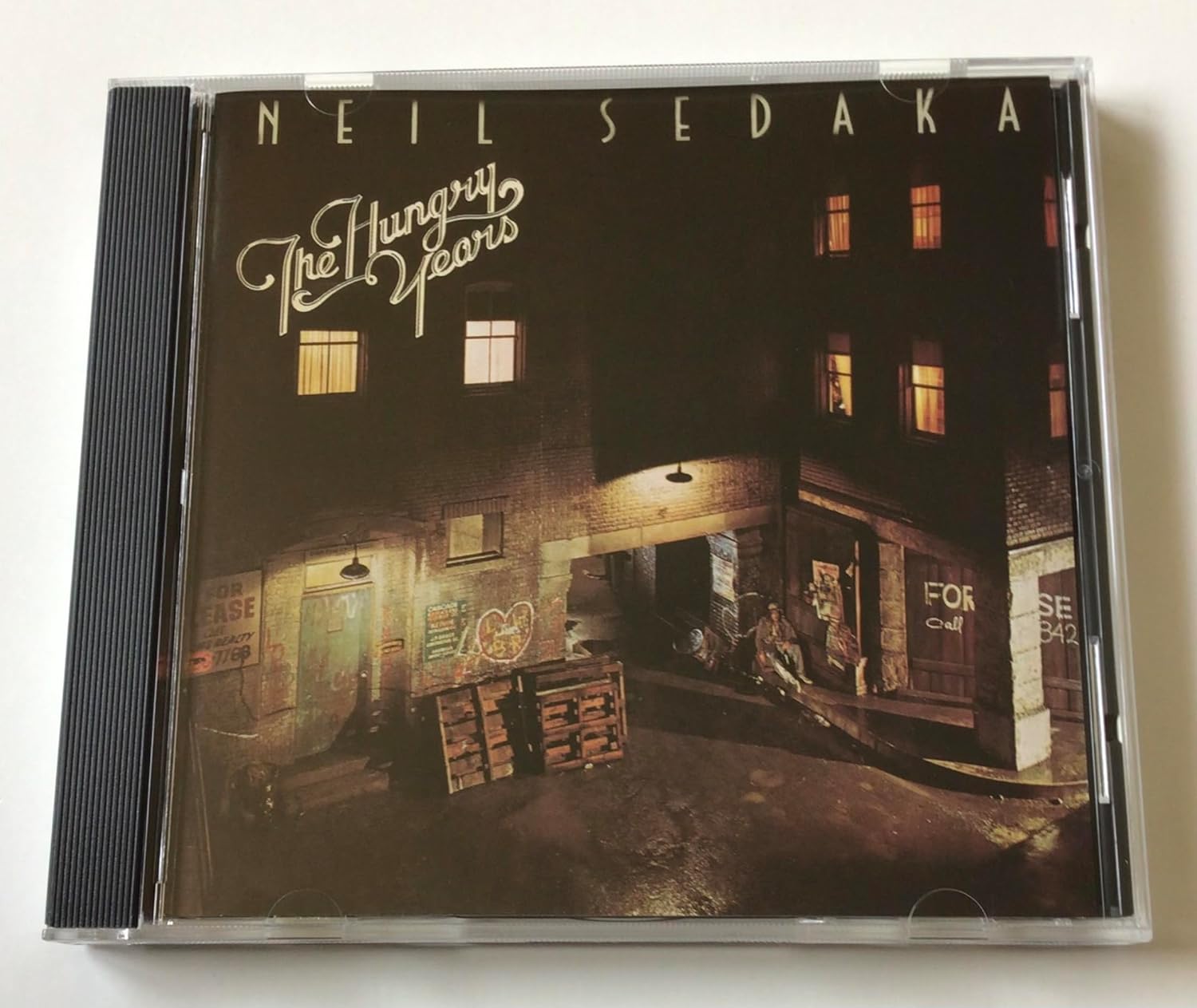
The Hungry Years, an amiable follow-up to Neil Sedaka‘s successful comeback LP, should further re-establish him as a pop music mainstay. Sparklingly produced, it features 11 strong new songs by Sedaka and his longtime collaborators, Howard Greenfield and Phil Cody. At least half the tunes sound like potential hits.
“Bad Blood” has already scored on the charts, thanks to its addictive hooks and “do run do run” chorus. Backing vocals by the uncredited Elton John are a plus.
Showcasing Sedaka’s equal facility with ballads, “Stephen” eschews over-sentimentality while offering the album’s most emotion-packed vocals. The song has little to do musically with Stephen Foster, the composer to whom its lyrics pay tribute, but Foster’s music is less important here than the singer’s admiration for it. And that comes across loud and clear.
Several of the other songs pack a milder punch. “Crossroads,” for example, misapplies a lighthearted melody to a somber lyric about desperation, and such other numbers as “Tit for Tat” and “Baby Blue” are prosaic. In “Lonely Night (Angel Face)” and “When You Were Lovin’ Me,” however, the singer effectively experiments with gospel elements. Ballads such as “New York City Blues” and “Breaking Up Is Hard to Do” (a completely revamped reading of the Sedaka oldie) also help make this album a success.
The album is available here.
*****

Listening to the insipid, overblown vignettes on Harry Chapin’s Portrait Gallery, one wonders how long he can continue to ride the wave of his past achievements. His finest song, “Taxi,” comes from a now ancient album. Other memorable Chapin tunes, including “Cat’s in the Cradle” and “Mail Order Annie,” have been few and far between, and this new LP, which contains not a single gem, finds the singer producing his sloppiest, most banal work to date.
“Dreams Go By,” for example, offers a plodding, cliche-ridden lyric about disillusionment that might better have been condensed into a single line and saved for other use. In “The Bummer,” Chapin spends nearly 10 minutes histrionically unraveling a sketchy plot that seems more suitable for a shoot-’em-up show on television. And “Sandy” (for the singers wife) weds an inconsequential melody to such Hallmark-greeting-card-styled verse as “She has caught the mystery of all that’s wild and free / Oh yes, I see the world in her, for she means the world to me.”
The album almost scores with “The Rock.” The song profits from a biting string section and some fairly deft allegorical lyrics, but Chapin never quite transcends the triteness of his basic message. “Someone Keeps Calling My Name,” the disc’s other partial success, boasts an attractive melody and a few cute lyrics but is marred by the writer’s penchant for putting his own words in his characters’ mouths.
What’s most disturbing is Chapin’s slick delivery. He’s a talented artist, and he knows how to make good music. One would think, therefore, that he’d have enough of a critical ear to have suspected that this isn’t that.
The album is available here.
*****

Once upon a time, Melanie wrote and sang from the heart. Her material—including songs such as “Tuning My Guitar,” “Close to It All,” and “Leftover Wine”—was intensely personal. You felt her presence; you knew she cared.
The new Sunset and Other Beginnings is another story. Melanie delivers almost every tune with the same sweet detached voice, and she gives nary a clue to her thoughts. One suspects that this group of songs isn’t particularly important to her. Perhaps it is because a large chunk of the program consists of covers, and much of it is unsuited to her style.
In “I’ve Got My Mo-Jo Working,” the album’s worst track, the singer wanders aimlessly in foreign territory. A meley of the Supremes’ “You Can’t Hurry Love” and the Shirelles’ “Mama Said” proves similarly misconceived.
Melanie seems more at home with the bouncy “Dream Seller,” Lerner and Lowe’s well-arranged “Almost Like Being in Love,” and “What Do I Keep” (a song about a newly divorced woman). But a plethora of instrumentalists and syrupy backup vocalists frequently obscure the cutting edge in her voice. The same can be said of lyrically trite Melanie originals such as “Loving My Children” and “People Are Just Getting Ready.”
In Bruce Pollack’s book, In Their Own Words, Melanie says, “I always wonder if there are too many I’s in my songs. I wish there could be less.”
Literally speaking, there are still many I’s in her music, but Melanie herself seems to have almost disappeared.
The album is available here.
Discover more from By Jeff Burger
Subscribe to get the latest posts sent to your email.
 By Jeff Burger