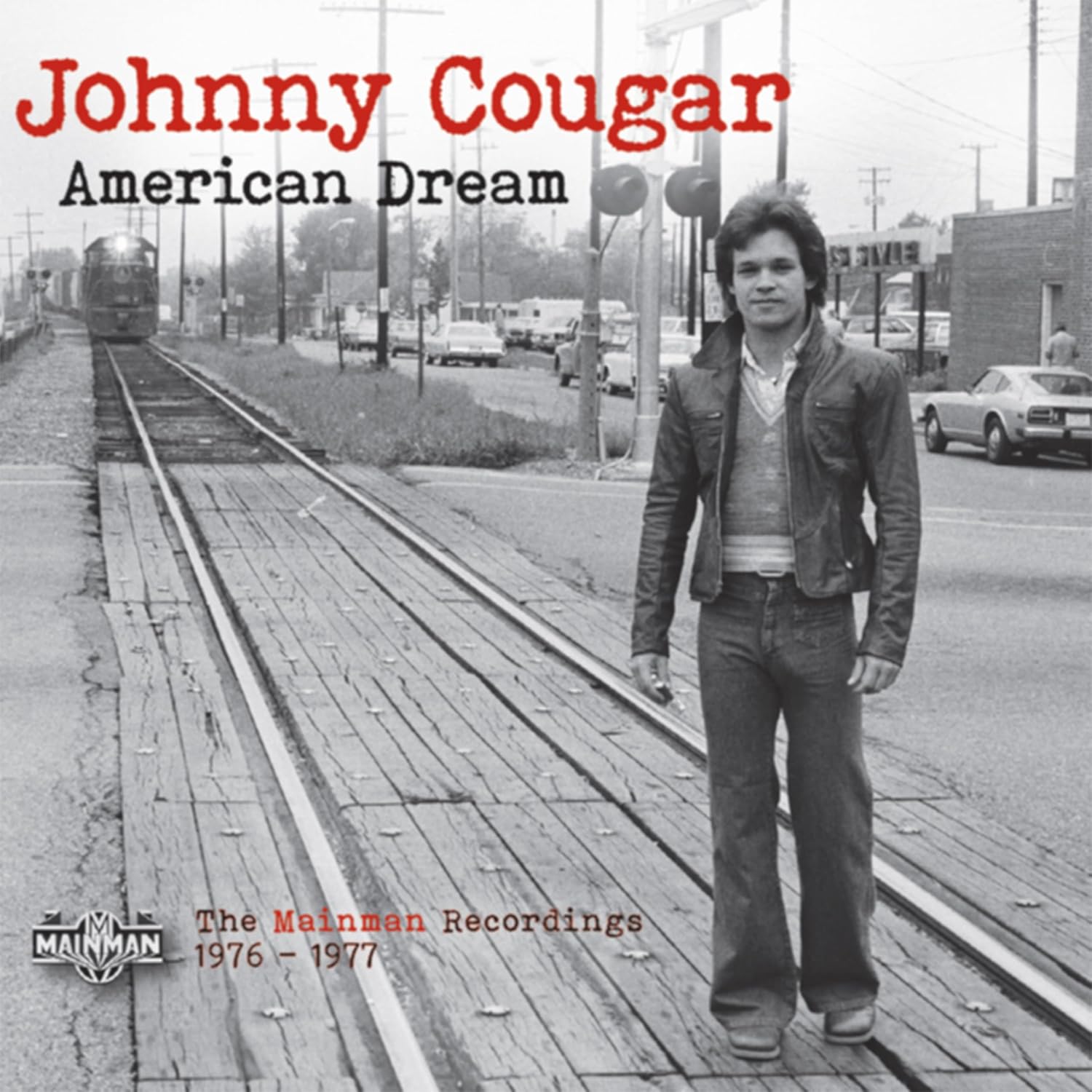
Lacking clout when he entered the music business, John Mellencamp acquiesced to his manager’s insistence that he change his name to the ostensibly more marketable Johnny Cougar. But after he began to score hits, the Indiana native started billing himself as John Cougar Mellencamp before finally reverting to John Mellencamp.
A new two-CD set called American Dream takes us back to the Johnny Cougar days, when the singer was a household name mainly just in his own household. The 45-track collection presents a talented and ambitious young man whose vocal approach is already rather well-honed, but whose lyrics still need sharpening and whose musical direction and career prospects remain uncertain.
The set includes Chestnut Street Incident, Mellencamp’s 1976 debut LP, which sold poorly at the time; a contemporaneous EP called U.S. Male; and The Kid Inside, a 1977 album that wasn’t released until six years later, after the success of Mellencamp’s chart-topping American Fool LP. Also featured are 10 previously unissued album outtakes and the 10-track Skin It Back, a version of 1979’s John Cougar that originally appeared only in Australia.
Mellencamp compositions predominate in the anthology, and they suggest where he might be headed. In some of his songs, such as in “Dream Killing Town” and the violin-spiced “Chestnut Street,” you can hear the gritty Midwestern smalltown storytelling that would later define his lyrical approach. The verses aren’t as evocative as those on later releases, however, and many of these early originals, such as “American Son,” deliver undistinguished new wave-influenced pop-rock.
The collection includes a motley handful of covers, among them David Bowie’s “The Man Who Sold the World,” John Sebastian’s “Do You Believe in Magic,” Roy Orbison’s “Oh Pretty Woman,” the Doors’ “Twentieth Century Fox,” Iggy Pop’s “I Need Somebody Baby,” and Paul Revere’s “Kicks,” which Barry Mann and Cynthia Weil wrote. Thanks largely to superior material, some of these interpretive tracks outshine the Mellencamp originals.
American Dream is not the first album by this artist that anyone should buy. If you’re already significantly invested in his large catalog, however, you might well be interested in this peek at his half-century-old embryonic work and the hints it offers about what was to come.
The album is available here.
New Zappa Box Expands on ‘Bongo Fury’
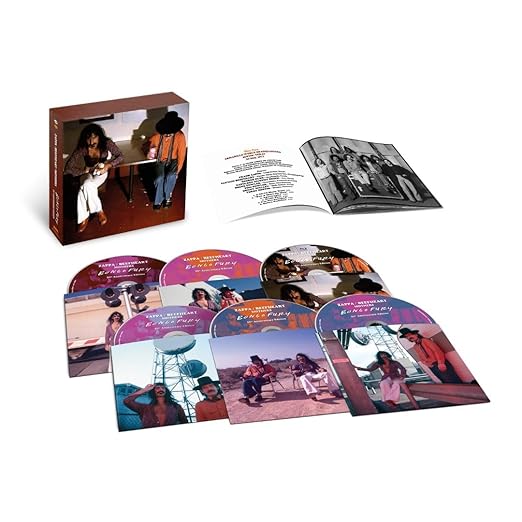
If you’re a Frank Zappa fan who has been picking up all the music that his label has issued in recent years, it might be time to think about renting a storage locker to house your mushrooming collection. In the last five years alone, there have been at least 15 fat box sets, several of which were Halloween-themed offerings that came with masks, capes, and assorted other closet fillers.
The latest package celebrates the 50th anniversary of Zappa’s Bongo Fury. Featuring material recorded in concert at Austin, Texas’s now-defunct Armadillo World Headquarters along with a couple of studio tracks, it is notable as the last album billed to his Mothers group. Moreover, it is Zappa’s final collaboration with Captain Beefheart (aka Don Van Vliet), his friend since high school, who previously appeared on his One Size Fits All LP.
Like many Zappa albums, Bongo Fury offers a decidedly uneven program, mingling inventive jazz-inflected prog-rock and Frank’s spectacular electric guitar with spoken and sung inanities by Zappa and Beefheart (whose growl here sounds reminiscent of Wolfman Jack). Those puerile bits aside, however, this gargantuan new edition of Bongo Fury delivers a good deal of excellent music on its five CDs, the vast majority of which has not previously been released.
Besides a version of the original LP that was remastered in 2012, the set includes songs that didn’t make the 1975 album; new arrangements, mixes, and extended versions of ones that did; and a few Zappa oldies. Also featured are two complete May 1975 concerts at Armadillo World Headquarters, and several cuts from the previous month at a California venue, including the previously unheard “Portuguese Lunar Landing.” In addition, there’s a Blu-ray that delivers the original album and bonus tracks in Dolby Atmos, Dolby True HD surround sound, and hi-res stereo.
The box set is available here. Note that other editions of this release are available, including digital and one- and two-LP vinyl versions.
Also Noteworthy
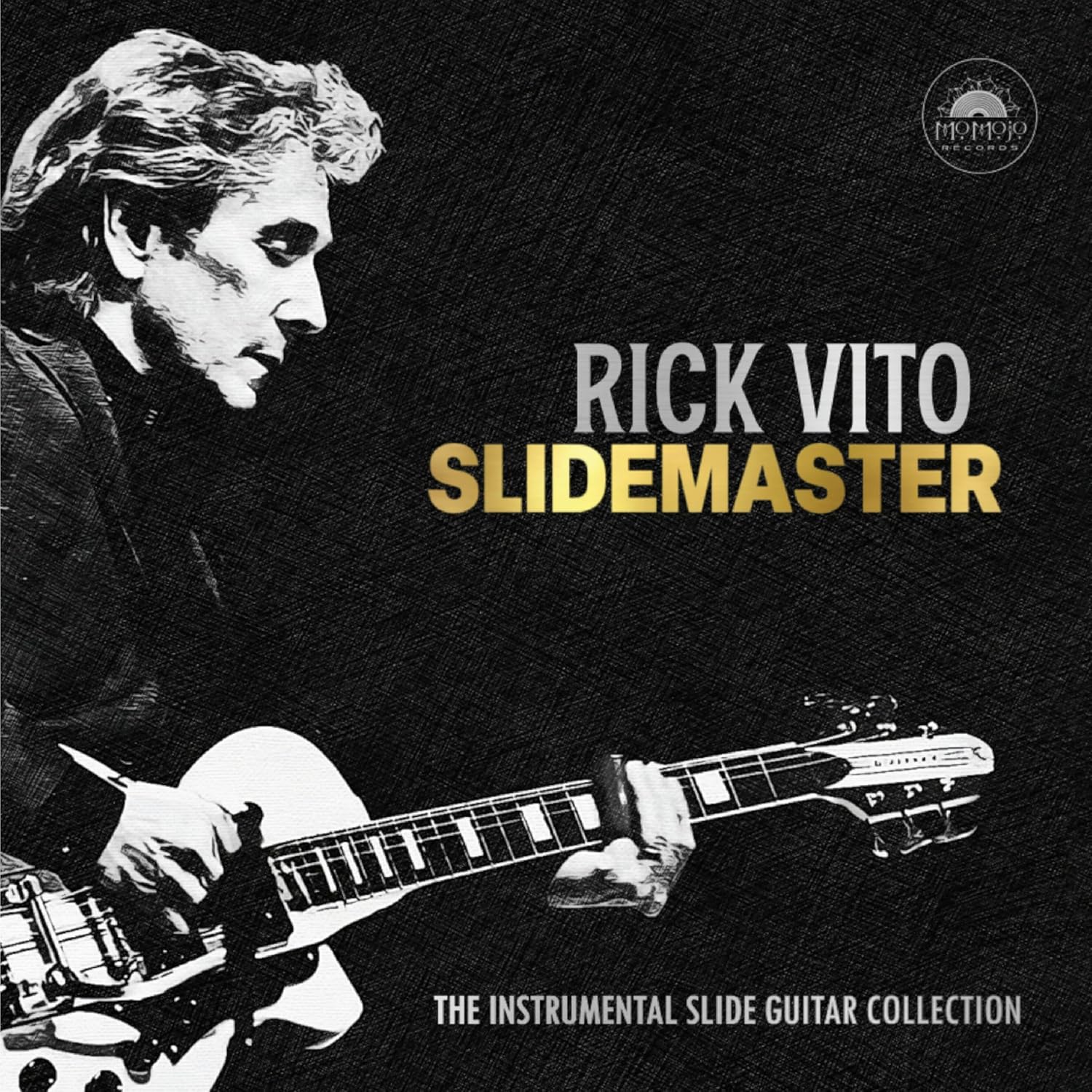
Rick Vito, Slidemaster. Rick Vito is perhaps best known for his years with Fleetwood Mac (1987–1991), when he replaced Lindsey Buckingham as lead guitarist. However, his resume also includes live and studio work with a long list of other prominent singer/songwriters and bands, among them Bonnie Raitt, Roger McGuinn, John Fogerty Jackson Browne, and Bob Seger. (That’s Vito’s magnificent slide guitar you hear on Seger’s “Like a Rock.”)
The all-instrumental, 12-track set on this latest album leaves no doubt that Vito is the slide guitar master that the title proclaims him to be. The CD, which combines some of his favorite old tracks with new recordings, features seven originals, among them standouts like “Vegas Jump,” “The Big Beat,” and “Slide the Blues,” plus five covers, including “Albatross” and “The Supernatural,” both by Fleetwood Mac founder Peter Green, and Sam Cooke’s “A Change Is Gonna Come.”
The album is available here.
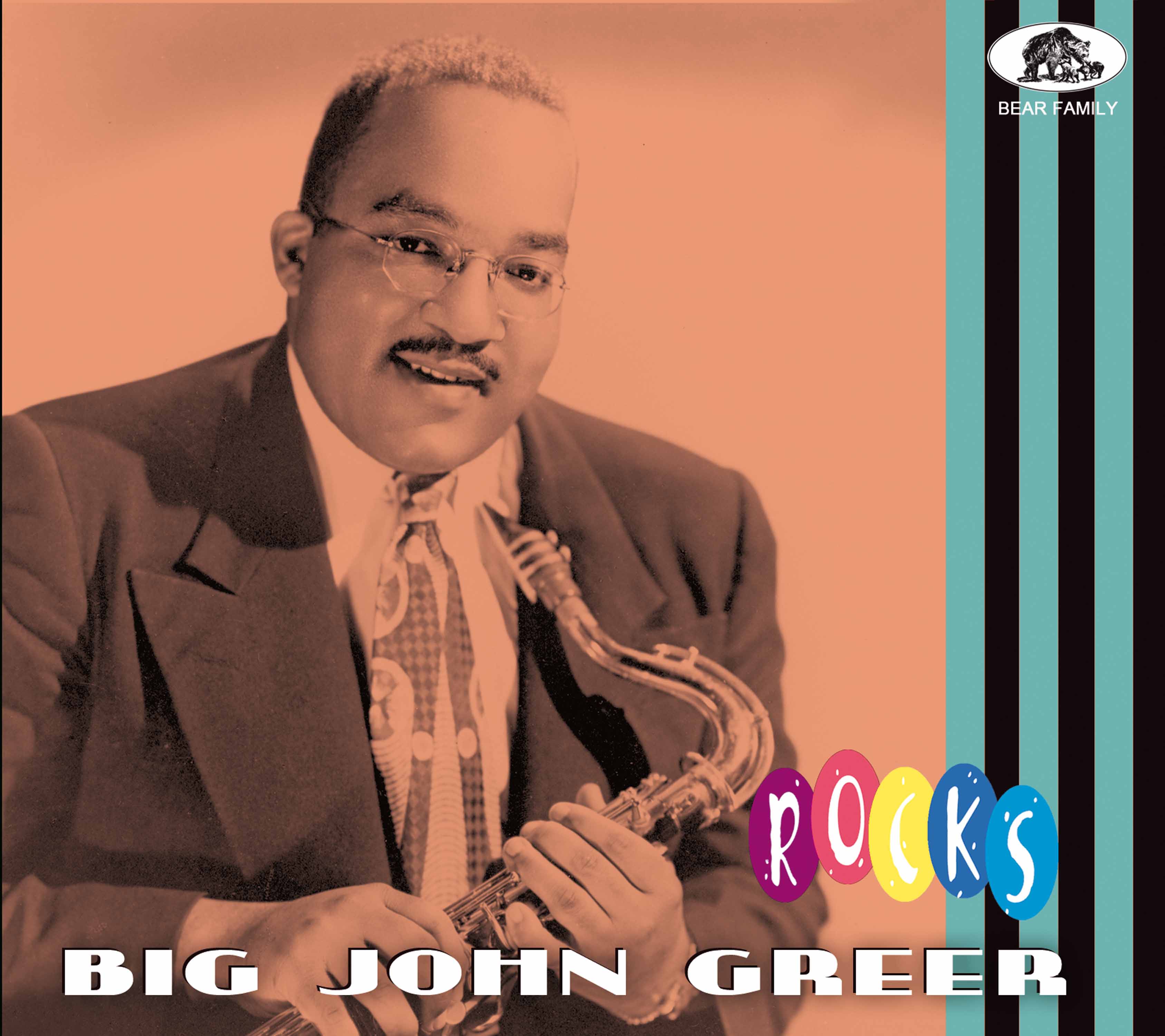
Big John Greer, Rocks. Big John Greer isn’t among the most famous artists to be featured in the Bear Family label’s Rocks series, but he merits attention for his self-assured, charismatic vocals and excellent tenor sax work. The Arkansas native, who developed an alcohol problem in his later years and died at age 48, scored his biggest hit in 1951 with “Got You on My Mind,” the song that closes this compendium.
Rhythm and blues tracks recorded between 1948 and 1953 dominate the album, which comes with an information-packed 32-page booklet. Among the 30 selections are Granville McGhee’s “Drinkin’ Wine Spo-Dee-O-Dee,” Cy Coben’s “You Played on My Piano” (a duet with big band vocalist Dolores Brown), “Come Back Maybelline” (a response to the Chuck Berry hit), and nine numbers written or co-written by Greer. In many of these performances, you can hear the sort of sounds that set the stage for rock and roll.
The album is available here.
Discover more from By Jeff Burger
Subscribe to get the latest posts sent to your email.

