
The Wandering Hearts, Déjà vu (We Have All Been Here Before). Original material dominates Wild Silence, The Wandering Hearts, and Mother, the three previous albums from this British folk-rock trio. For its latest outing, however, the group eschews self-penned tracks, opting instead to cover in its entirety Déjà Vu, the classic 1970 LP from Crosby, Stills, Nash & Young. The songs appear in the same order as on CSNY’s original record.
“A note-for-note facsimile was never going to be an option,” according to the band, whose members include Tara Wilcox, Chess Whiffin, and A.J. Dean. Adds Wilcox: “We don’t have to work too hard to put our spin on this, because we just aren’t four men from 1970. Having two female voices gives this a new spin straightaway.” True, though the group does stick close enough to the original arrangements to give fans of the CSNY album a bit of the feeling named in its title.
That said, this new release includes some strong performances, especially the folkier ones, which make the most of the trio’s vocal prowess. On numbers such as “Teach Your Children,” “Our House,” “Helpless,” and “4+20,” any sense of déjà vu is overshadowed by the excellence of the Wandering Hearts’ harmony work.
The album is available on vinyl here and on CD here.

Willie Nile, The Great Yellow Light. New York–based rocker Willie Nile released only about half a dozen albums during the first two decades of his long career, starting with his eponymous 1980 debut. In recent years, though, he has picked up the pace considerably, issuing such CDs as World War Willie (2016), Positively Bob: Willie Nile Sings Bob Dylan (2017), Children of Paradise (2018), New York at Night(2020), The Day the Earth Stood Still (2021), and Live at Daryl’s House Club(2024). The newest addition to that list is The Great Yellow Light, which consists solely of material written, or in a few cases co-written, by the artist.
Working with Grammy-winning producer Stewart Lerman, who also collaborated with the singer/songwriter on most of his other recent albums, Nile and his fired-up band have crafted one of his most passionate releases to date. It’s also among his most political, thanks to blistering tracks like “Wake Up America,” which features vocal contributions by the great Steve Earle, and “We Are We Are,” which Nile describes as a “battle cry for liberty, freedom, and compassion, and refusing to give up or give in to the darkness.”
Anthemic, punk-influenced rockers dominate the set, but Nile makes room for “What Color Is Love,” a piano-based ballad, and the midtempo “An Irish Goodbye,” a song about mortality that incorporates uillean pipes and tin whistle and finds the singer sharing centerstage with Belfast-born musician Paul Brady.
The album is available on vinyl here and on CD here.
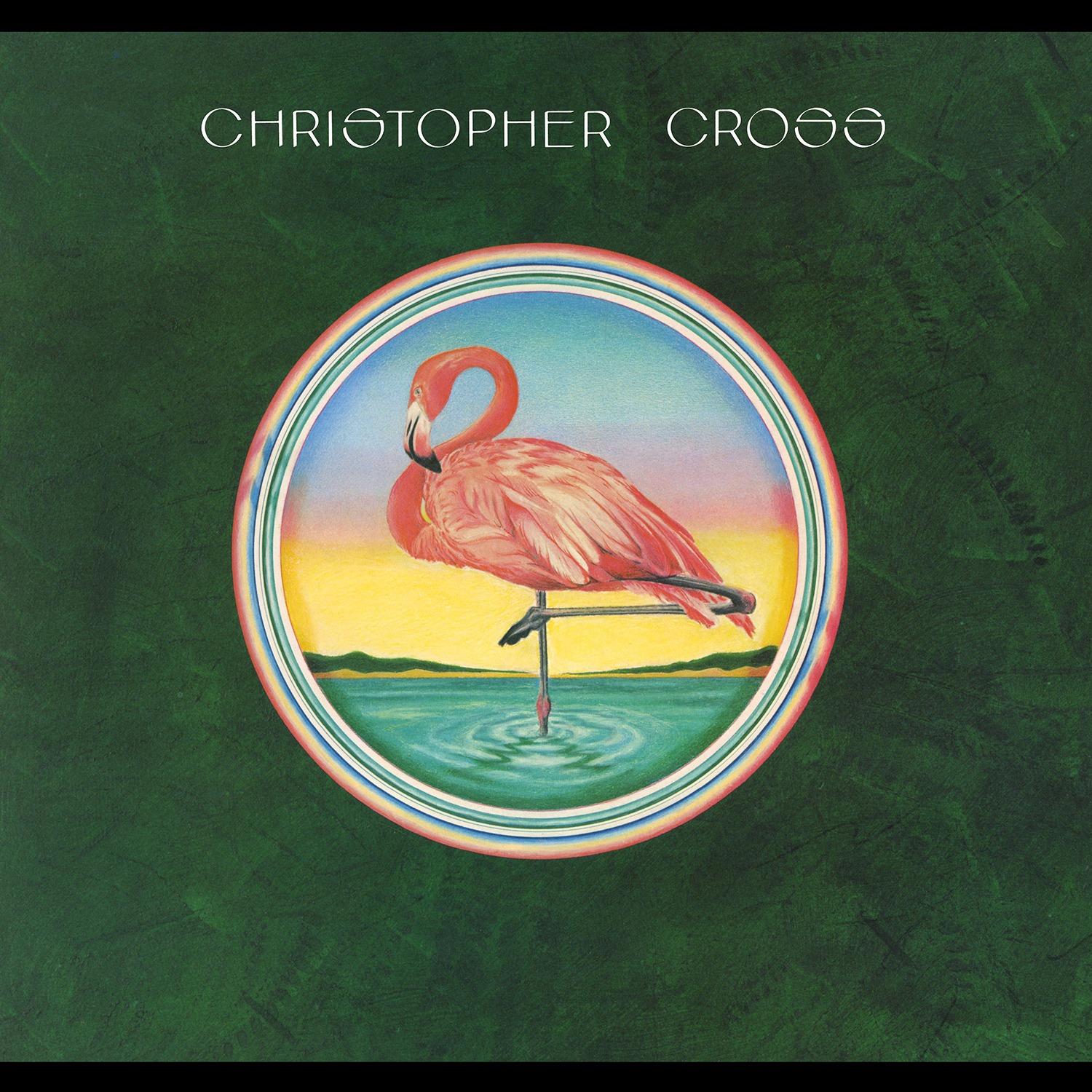
Christopher Cross, Christopher Cross (expanded edition). Few debut albums in the history of popular music have garnered as much success as the eponymous one from singer, songwriter, and guitarist Christopher Cross.
Though virtually unknown at the time of the record’s release in 1979, he rocketed to fame with this soft-rock LP, whose star-studded guest list includes such names as Nicolette Larson, Michael McDonald, Don Henley, and J.D. Souther. The album spent five months on the pop charts and sold more than five million copies. It also earned Cross Grammys for Album of the Year, Record of the Year, Best New Artist, and Song of the Year. Four of the LP’s nine self-penned songs became hit singles, among them “Ride Like the Wind,” “Never Be the Same,” “Say You’ll Be Mine,” and the chart-topping “Sailing.”
Unfortunately, Cross’s fall was nearly as rapid as his rise. He did score a couple more hits in the early 1980s, including “Arthur’s Theme (Best That You Can Do),” which reached No. 1 in 1981. But his time in the spotlight was over by the middle of that decade.
Listening to a new, expanded edition of Christopher Cross, which Steely Dan associate Michael Omartian produced, you can hear why the original album did so well, but you can also sense why the singer’s star faded. The reissue features a 2019 remaster of the LP, plus 11 bonus tracks. Among them are several previously unissued tunes and demos of five of the debut’s songs, most of which don’t sound all that different from the final versions. Everything on the record is impeccably crafted, expertly delivered, and generally more impressive than what you’d expect from a newcomer. But much of it is also light as a feather, and feathers can float away in the wind.
The album is available on vinyl here and on CD here.
Iron Horse, Pickin’ on Creedence Clearwater Revival: Bluegrass Rising. Iron Horse seems to be on a mission to prove that just about any popular music song can be turned into bluegrass. The quartet has covered dozens of rock artists, including the Steve Miller Band, Van Morrison, and Buffalo Springfield—and even, believe it or not, Kiss, Metallica, and Ozzy Osborne. Among Iron Horse’s recent albums are ones devoted to songs by Pearl Jam and the Doors.
All these LPs feature first-rate performances by the group’s members—Anthony Richardson (banjo), Tony Robertson (mandolin), Ricky Rogers (bass), and Vance Henry (guitar)—each of whom contributes satisfying vocals. Their covers don’t necessarily evoke anything close to the mood and sentiments of the originals, however. On Pickin’ on the Doors, for example, “Break on Through (to the Other Side)” and “People Are Strange” sound great, but these bright, melodic bluegrass outings have nothing to do with the edgy psychedelia delivered by Jim Morrison and his band.
Iron Horse’s new Pickin’ on Creedence Clearwater Revival is a bit of a different story. Creedence’s influences included country and swamp pop, which helps to make these bluegrass treatments seem as if they issue from the same universe as the originals. The 12-track program focuses exclusively on Creedence’s best-known material, including such Top 10 John Fogerty–penned numbers as “Proud Mary,” “Bad Moon Rising,” “Travelin’ Band” “Who Will Stop the Rain,” “Up Around the Bend,” “Have You Ever Seen the Rain,” and “Down on the Corner,” which namechecks Buck Owens.
The album is available here.

The Black Watch, For All the World. John Andrew Fredrick, leader of the California-based indie-rock outfit the Black Watch, says, “Songs just pour out of me.” Apparently so, as this 67-minute release, which contains 21 of them, is the 25th full-length album from a group that has also issued more than half a dozen EPs. The outfit, whose seven CDs so far this decade include such titles as Future Strangers, Here & There, and Weird Rooms, specializes in bright, poppy, guitar-based psychedelia-tinged rock. A review in England’s The Independent describes the band as finding “chaos in the calm, miasma in the melody, like Nick Drake joining My Bloody Valentine.”
That characterization applies rather well to this release, though you’ll hear fewer echoes of Drake than of My Bloody Valentine. Fredrick, who cites the Beatles as a major influence, also evokes that group, especially on the catchy “There’s a Place,” which shares the title of an early Fab Four number and mentions “those four guys” who “shook the world.”
The album is available on vinyl here and on CD here.
Discover more from By Jeff Burger
Subscribe to get the latest posts sent to your email.
 By Jeff Burger
IF you want great “guitar based psychedelia tinged Rock, Last Days Of May’s 1st Lead Guitarist Karl Prekoda’s 2nd major Band after he left Dream Syndicate (‘Medicine Show’ was his last LP w/ the Dream Syndicate). LDoM: #1- Self titled, #2 ‘Radiant Black Mind’; #3 ‘Inner System Blues’ & I haven’t been up to date on anything after that last one but the Squealer label is strong and healthy.
LikeLike