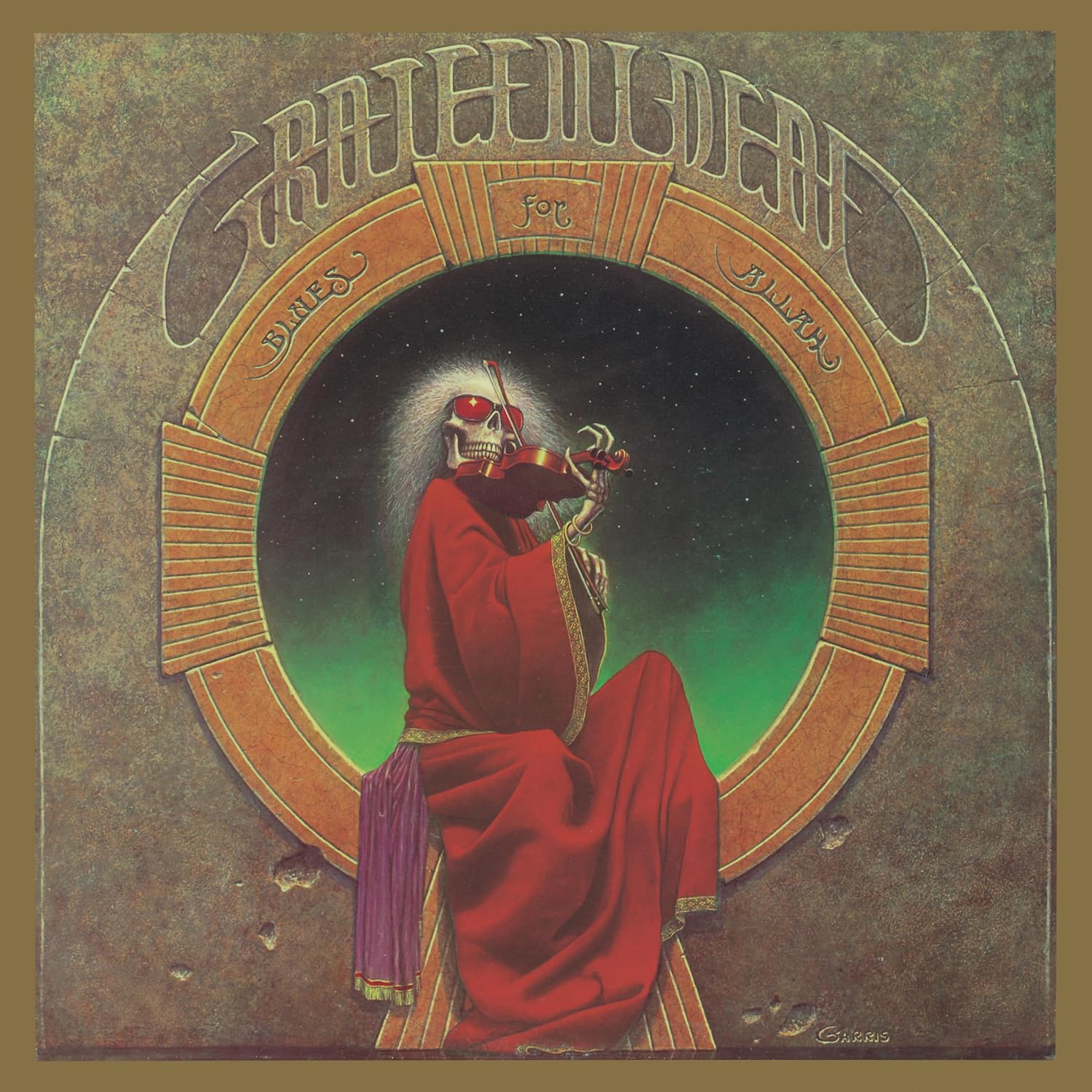
Not long ago, it seemed as if the Dead might soon be just that. A pair of their albums offered a preponderance of lugubrious-sounding dirges and sold disappointingly.
However, the best moments on the Grateful Dead‘s new release, Blues for Allah, suggest the group is again a force to be reckoned with. Mickey Hart is back in the band after four years away and is making his presence felt; Keith and Donna Godchaux also add significantly to the mix.
“Help On the Way” is a nice showcase for Jerry Garcia’s vocals and lyrical lead guitar. It flows into “Slipknot,” a gorgeous instrumental. “Franklin’s Tower,” boasting a singalong chorus and snappy, efficient chord progressions, hits a solid groove, as does “The Music Never Stopped.”
“Crazy Fingers,” the Side Two opener, proves less successful. Plodding along for almost seven minutes, the tune weds one of Robert Hunter’s most cryptic, inaccessible lyrics to a weak melody.
The disc ends with a 12-and-a-half-minute medley, “Blues for Allah/Sand Castles and Glass Camels/Unusual Occurrences in the Desert.” As its name implies, it is heavily spiced with Eastern influences; unfortunately, these exotic flavorings do not redeem the lethargic tune or its superficial lyrics, which are given in four languages and sound like the output of an acid-taking Henry Kissinger.
The album is available here.
*****
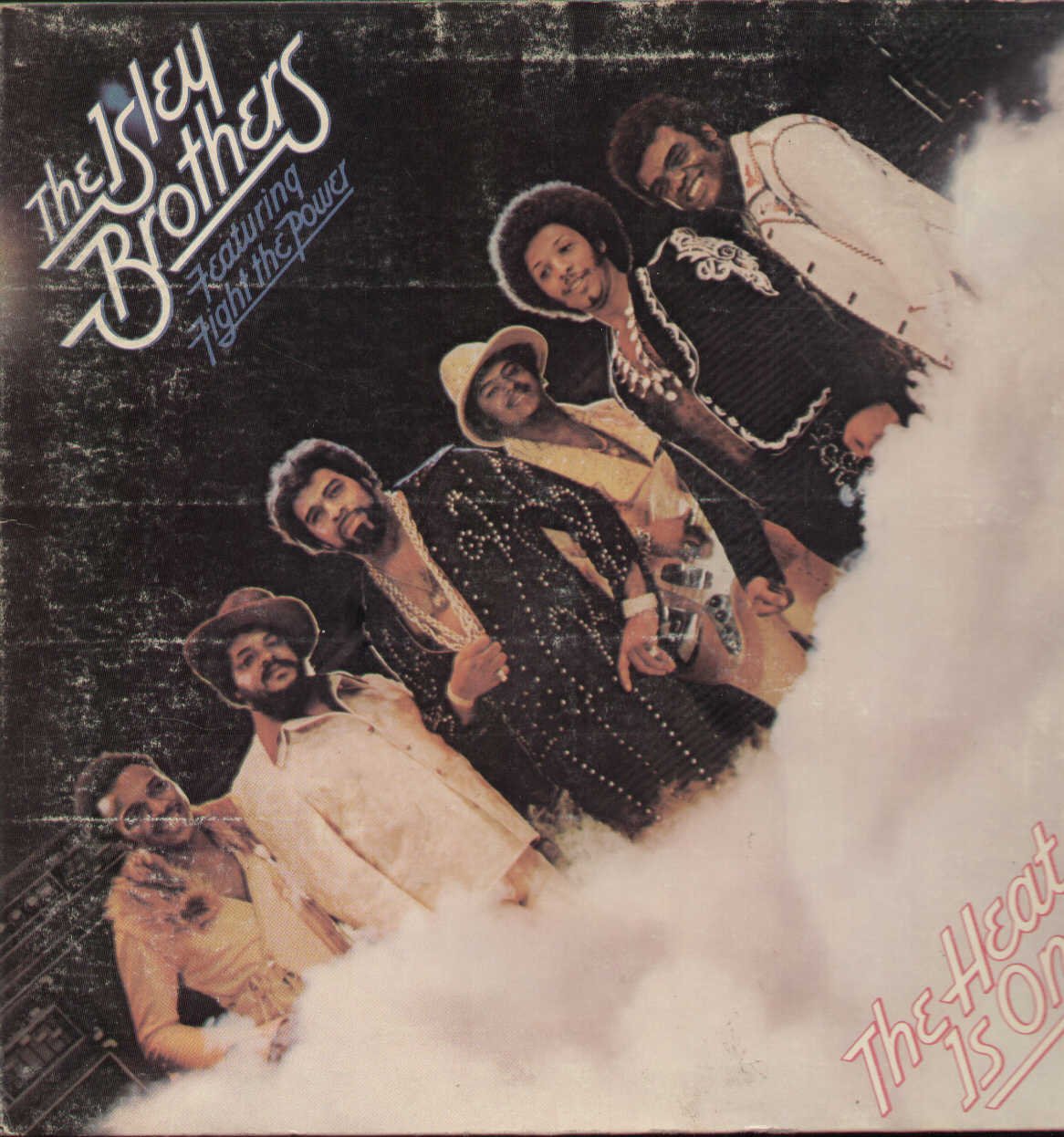
At this point, the Isley Brothers can be regarded as an institution in the world of soul. Their first smash hit single, “Shout,” assaulted the charts back in 1959. But listening to The Heat Is On, their latest album, those who aren’t conversant with the Isleys’ credentials might mistakenly brand them as Johnny-come-latelys on the disco scene. The extended, ultra-rhythmic tracks on the LP seem to be just what the dancer ordered. The same could be said, however, of tunes the group cut years ago. “Twist and Shout” is quintessential mid-1960s on-your-feet material. And the 16-year old “Shout” clocks in at a disco-perfect but then unheard-of six minutes.
Moreover, the current LP does not merely carry on a tradition and prove that the Isleys can still deliver the goods. It is a portrait of a still-growing band, one that refuses to rest on its laurels and slip into a formula.
Ernie Isley, who joined his brothers’ outfit in 1968, now nearly steals the show with rapid-fire solos in the tradition of one-time Isleys road musician Jimi Hendrix. Particularly on the infectious “Hope You Feel Better Love,” the album’s obvious highpoint, he grabs you with an opening riff and never lets go.
As this disc illustrates, lead singer Ronee Isley has evolved, too. Long known as a top-notch, high-energy soul shouter, he is today a first-rate balladeer as well.
Despite all this, The Heat Is On exhibits some flaws. For one thing, the lyrics to several of the tunes slide by without making any strong impression. And while “Fight the Power” and the title track are dancers’ delights, those who prefer to take their music sitting down might find these songs rather long-winded.
The album is available here.
*****
Over the past two decades, pianist Mose Allison has evolved into a jazzman’s equivalent of rock’s John Mayall and country’s Earl Scruggs. Both an innovator and an educator, he has soaked up influences, fusing them into a fresh, distinctive style that reaches fans rooted well outside his genre.
Creek Bank, a two-LP package of 1958 recordings (previously released as Young Man Mose and Creek Bank) offers a good chronicle of that prolific period.
Highlighting the first disc, which boasts able accompaniment by bassist Addison Farmer and percussionist Nick Stabulas, is a pensive treatment of Duke Ellington’s “Don’t Get around Much Anymore.”
“Stroll,” the only Allison original on the first album, also merits special attention. Tinted by the composer’s affection for the Charlie Parker/Dizzy Gillespie school of bebop jazz, the upbeat tune offers a rare showcase for Allison’s proficiency on the trumpet.
Delightful readings of Parker’s “Yardbird Suite” and Ellington’s “Prelude to a Kiss,” as well as a now classic treatment of Willie Dixon’s “Seventh Son,” are on the second disc. This LP, which features drummer Ronnie Free in place of Stabulas, also includes five noteworthy Allison originals.
If you’re already an admirer of the pianist, you might want to seek out these examples of his first major turning point. If, on the other hand, you’ve yet to explore Allison’s work, there’s no better place to start than this.
The album is available here.
Discover more from By Jeff Burger
Subscribe to get the latest posts sent to your email.

