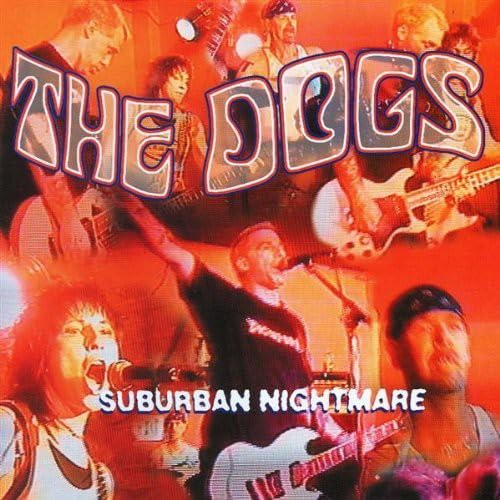
If you think the spirit of the 1960s is dead and gone, check out the Dogs, a rock and roll band whose existence offers evidence to the contrary.
Not only do they play a brand of rock that recalls such groups as the MC5, but they talk about psychedelic drugs in terms of a “learning experience,” live with friends in a communal situation, and say things like, “We’d never move to the suburbs. They’re too weird.”
Formed in 1967, the band differs from most others of similar longevity in that their original musical focus has not been altered to fit changing times.
The members of the group—guitarist Loren Molinare, bass player Mary Kay, and drummer Ron Wood—are happy to admit that their style is reminiscent of “the early stuff by Led Zeppelin, Ten Years After, MC5, and sometimes, the Beatles.” Their anachronistic sound, however, has apparently been hindering the band in their recent efforts to garner an album contract.
“Everyone at the record companies tells us that the group is too loud and old-fashioned,” reports the Dogs’ manager, Bill Sheets. “They want something more sophisticated and spacey. You now, with Moogs and things.”
“They want theatrical acts now,” puts in Loren. “And musically, the record companies don’t want wild rock and roll. They want it tame and down to earth, but with glitter and $125 boots.”
The group’s members aren’t interested in flashy costuming, but even if they were, they couldn’t afford it. A year ago, when they were residing in Detroit, they were just barely able to support a house large enough for their 13-member “family” (which includes manager Sheets, equipment people, and others). Last summer, the Dogs moved to New York with their full entourage, and the high costs of living in the Big Apple forced them to split into two small apartments. Before they will even consider compromising their way into $125 boots, they want to get everybody back together under one roof.
In any case, the Dogs are optimistic about finding a contract, which would bring money for a new home, without significantly altering their stage act.
Explaining that he believes the group’s 1960s flavor enhances its commercial appeal, Loren describes reaction to the Dogs at a recent Brooklyn gig, where they were third-billed to Elephant’s Memory and Chuck Berry.
“All the 10- and11-year-olds were at the early show. And when we first went on, they started screaming the usual, “We want Chuck! We want Chuck!” But then we played, and it was like we were the Beatles. I couldn’t believe the reaction we were getting. After us, Elephant’s Memory came out, and the audience didn’t dig them at all.”
“They liked our music,” says Mary, “because it’s young, and they can understand it. But a group like Elephant’s Memory gets up there, and they’ve been playing mostly to older people. The kids understand their music, but it’s a drag for them.”
“They missed the ’60s,” says Loren. “They knew what happened then, but they weren’t around for it. I think they want to have that era happen again, which it will. They’ll make it happen.”
Asked what the 1960s means to the Dogs, Mary giggles and offers a one-word summation: “Acid!” After someone comments that the drug’s use has dramatically declined over the past few years, she adds: “Not in this group, it hasn’t!”
“Things have changed, though,” Loren admits. “You did acid in the ’60s, and the vibrations were all around. You do it now, and it’s like you’re on another planet or something.”
Mary expresses concern that the present conversation, when published, might give the band a bad image. “We don’t just do acid to get off on it,” she emphasizes. “We do it for a learning experience. But these days, people don’t like groups who take drugs for any reason.”
“Yeah,” Loren says. “You know, in Circus magazine, they’ve got a new article, ‘Rock Stars Down on Drugs,’ and Mott the Hoople’s Ian Hunter says, ‘We’re not a drug band, we drink wine.'”
Mary grins. “Everybody’s alcoholics now!”
“And look at the lyrics today, man,” remarks Loren. “They say that drugs were so bad, but look at the drug culture and what they were trying to do. It was a lot better than what’s happening in the 1970s.”
Nodding in agreement, Mary glances around at her smiling, long-haired friends and concludes: “See, this is what’s kept us together. We haven’t really changed at all.”
Discover more from By Jeff Burger
Subscribe to get the latest posts sent to your email.

