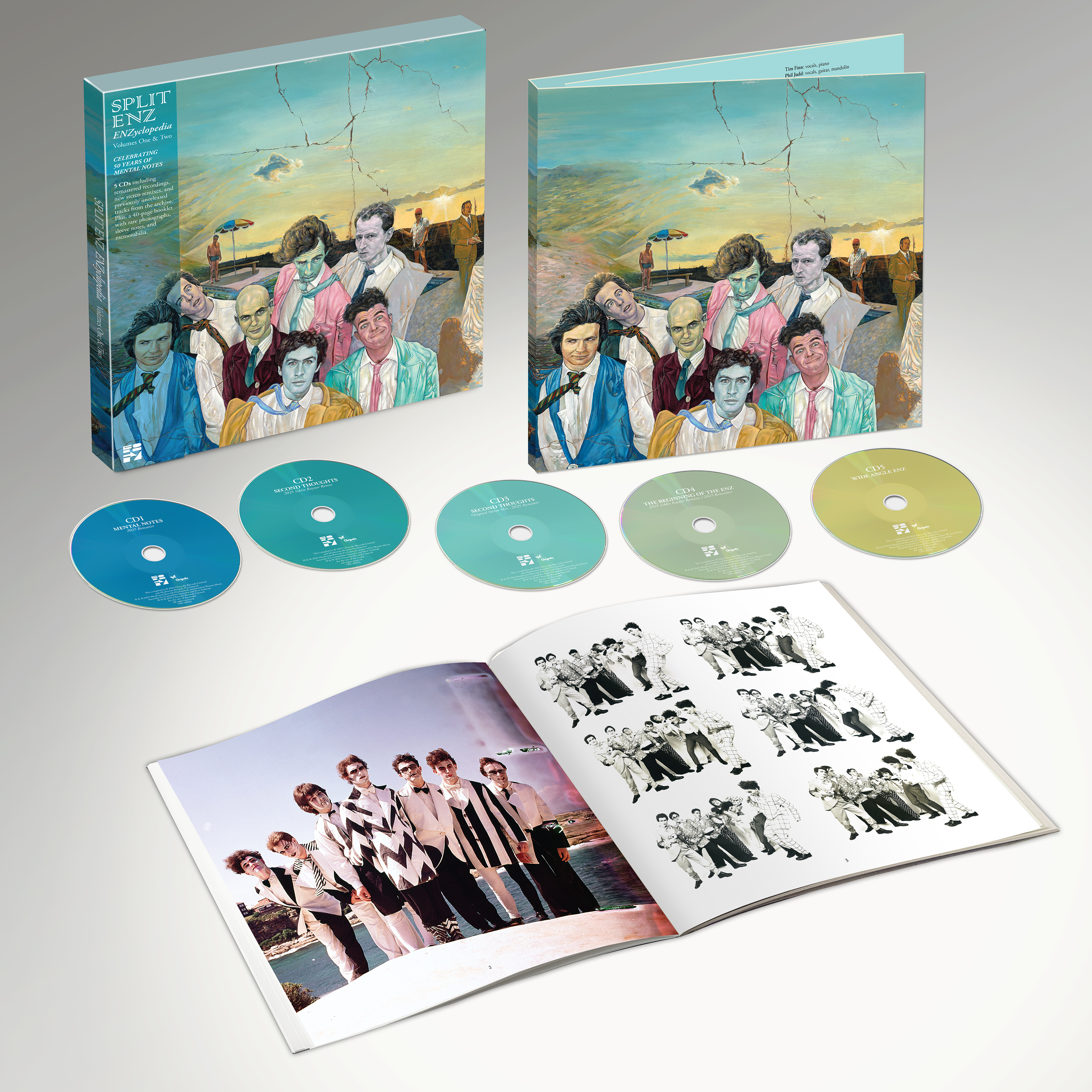
Neil Finn’s Crowded House wasn’t the first New Zealand band to make a mark beyond the southern hemisphere. That distinction goes to the experimental art-rock group Split Enz, which Neil’s older brother, Tim, and fellow songwriter Phil Judd formed in 1972. The group, which experienced numerous personnel and stylistic changes over the years, broke up in 1984, though a few reunions have since occurred.
Split Enz scored several No. 1 albums Down Under and had some success in Canada and Europe, but never garnered much attention in the U.S. Its best showing there came in 1980, with an album called True Colours (No. 40 in Billboard) and a catchy single that it spawned, “I Got You” (No. 53). By then, the group had shed most of its eccentricities, added Neil Finn to the lineup, and begun delivering tightly constructed rockers that were more conventional and accessible than its 1970s work.
If you’re up for something quirkier and more adventurous, you’ll want to focus instead on those early recordings, which are the subject of a new five-CD box called ENZyclopedia Vols. 1 & 2. Its material—which draws on prog-rock and new wave and at times recalls contemporaneous work by British rock groups like Nektar and Genesis—is complex, challenging, and decidedly uncommercial. These songs can be histrionic, pretentious, and, occasionally, just plain weird. (The same goes for Split Enz’s members’ costumes and hairstyles.) But at its best, such as on the dreamy “Late Last Night” and the sax-spiced “The Woman Who Loves You,” the band proved capable of excellence.
As this anthology reminds us, it also proved susceptible to self-doubt. Not satisfied with how its Australasia-only debut album, Mental Notes, turned out in 1975, the band called a do-over. It brought in Roxy Music’s Phil Manzanera as producer, reworked the record’s cover art, and rerecorded four of its songs. It also remade six more numbers, among them outtakes from Mental Notes and an early single, and it issued all this material in 1976 in Europe and the U.S. under the same title as the debut LP. (In Australia and New Zealand, it called the LP Second Thoughts).
Nearly half a century later, Tim Finn, for one, remains less than fully satisfied. “The ‘real’ Mental Notes is still hovering somewhere between two records, never to be fully realized,” he writes in the oversized 40-page booklet that comes with the box. “However, nowadays, I can hear beauty in the flaws.”
He evidently also still hears potential for improvement, because the new compendium includes a remix of Second Thoughts by Eddie Raynor, who played keyboards in the band from 1974 to 1984. (Perhaps they should have called this version Third Thoughts.) Also featured are 2025 remasters of the original Mental Notes and Second Thoughts and two discs’ worth of rare tracks, live cuts, and early singles, most of which have been remixed by Raynor. If this isn’t enough for you, you can pick up a limited-edition Blu-ray, sold separately, that contains a hi-res copy of the original Mental Notes, four mixes of Second Thoughts, including Dolby Atmos and 5.1, and music videos for three of that album’s tracks.
It all adds up to a slightly bumpy ride, but one that packs in some thrills along the way.
The box set is available on vinyl here and on CD here. The Blu-ray is available here.
An Anthology Collects Instrumental Hits from 1957–62
One of the many ways the popular music landscape looked different in the early rock era is that instrumentals frequently became big hits. Thirty-three wordless tunes made Billboard’s Top 40 in the decade beginning with 1955, according to Goldmine magazine, while only 10 made the list in the 30 years between 1975 and 2004.
No one is quite sure why songs without vocals largely fell off the charts after the early 1960s. As Goldmine suggests in a fascinating two-part series on this phenomenon, however, one factor must be the extent to which lyrics became more important after acts such as the Beatles and Bob Dylan emerged. Before that, singers frequently delivered lines that were cliched, silly, or formulaic.
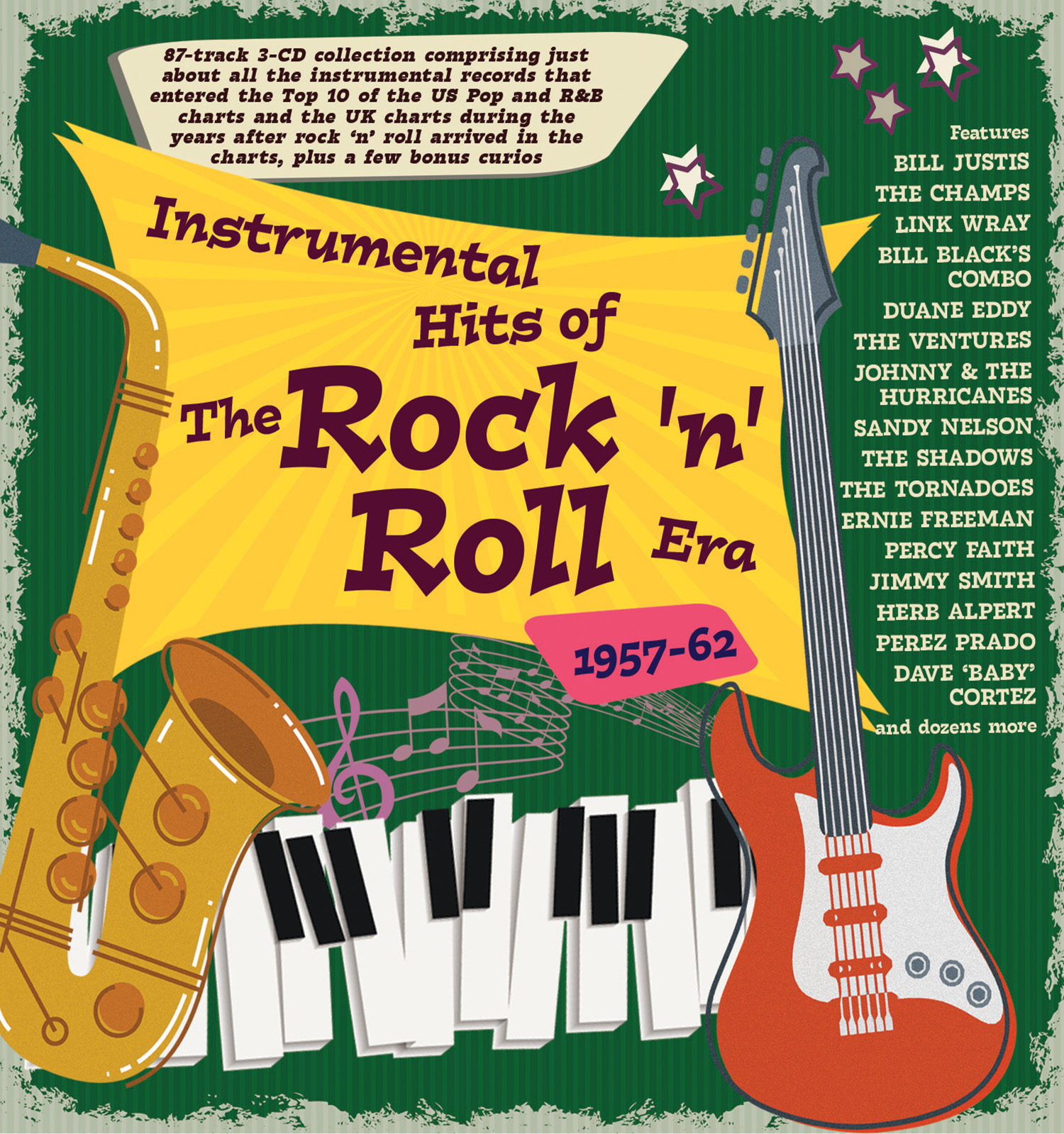
You don’t have to endure such lyrics while listening to Instrumental Hits of the Rock ’n’ Roll Era 1957–62. As its cover proclaims, this three-CD set delivers “just about all” the instrumentals that made the Top 10 in the U.S. pop and R&B charts and the UK charts during rock ’n’ roll’s early years, “plus a few bonus curios.”
The album’s title, while accurate, can be misleading: though all the songs do indeed come from the rock era, they are most certainly not all rock. As the cover blurb indicates, some qualify as pop or R&B, and there are also jazz and novelty tracks, as well as orchestrated movie themes and easy-listening numbers. The program offers a varied and uneven listening experience, embracing everything from seminal rockers such as Link Wray’s “Rumble” to Lawrence Welk’s Muzak-ready Sominex substitute, “Calcutta.”
Much of this 86-track collection is excellent, however. Among the many standouts are “Rebel Rouser” and three other numbers by rock guitarist Duane Eddy, who scored 15 Top 40 hits during this era; the Tornados’ international smash, “Telstar,” which famed producer Joe Meek composed; and two sublime tracks from Britain’s trad jazz movement, “Stranger on the Shore,” a chart-topper by clarinetist Acker Bilk, and “Petite Fleur,” by trombonist Chris Barber.
Other highlights include Santo and Johnny’s steel-guitar showcase, “Sleepwalk,” which made it to No. 1; “Walk—Don’t Run,” the first and arguably best hit by the rock and roll group the Ventures; and four UK chart-toppers by Cliff Richard’s backing group, the Shadows, which had a whopping 24 Top 40 hits in England despite attracting virtually no attention in the U.S.
The album is available here.
Restored Audio Enhances 1940s Sinatra Material
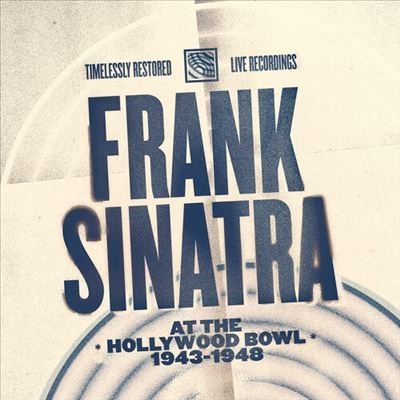
Frank Sinatra, the first mainstream pop vocalist to be featured at Los Angeles’s Hollywood Bowl, made three major appearances at this iconic venue in the 1940s. Most of the performances from these shows are collected on At the Hollywood Bowl 1943–1948. A vinyl version is available, but the CD includes more songs from the concerts and adds two bonus numbers that aired in 1943 on NBC’s Your Hit Parade.
Backed at the Hollywood Bowl by the Los Angeles Philharmonic (“the finest orchestra in the United States today,” Sinatra tells one audience), he delivers more than a dozen classics from the Great American Songbook on the CD, including Irving Berlin’s “The Girl That I Marry,” Cole Porter’s “Night and Day,” Sammy Kahn and Jule Styne’s “I Should Care,” and Ira Gershwin and Jerome Kern’s “Long Ago and Far Away.”
Though only two of the CD’s tracks have previously been officially released, all of them have long circulated among collectors and been available online. Still, this set is noteworthy because the audio has been beautifully restored and remastered from the best available sources. Also, the album comes with an illustrated 20-page booklet that includes notes by Sinatra expert Charles Granata.
Discover more from By Jeff Burger
Subscribe to get the latest posts sent to your email.
 By Jeff Burger