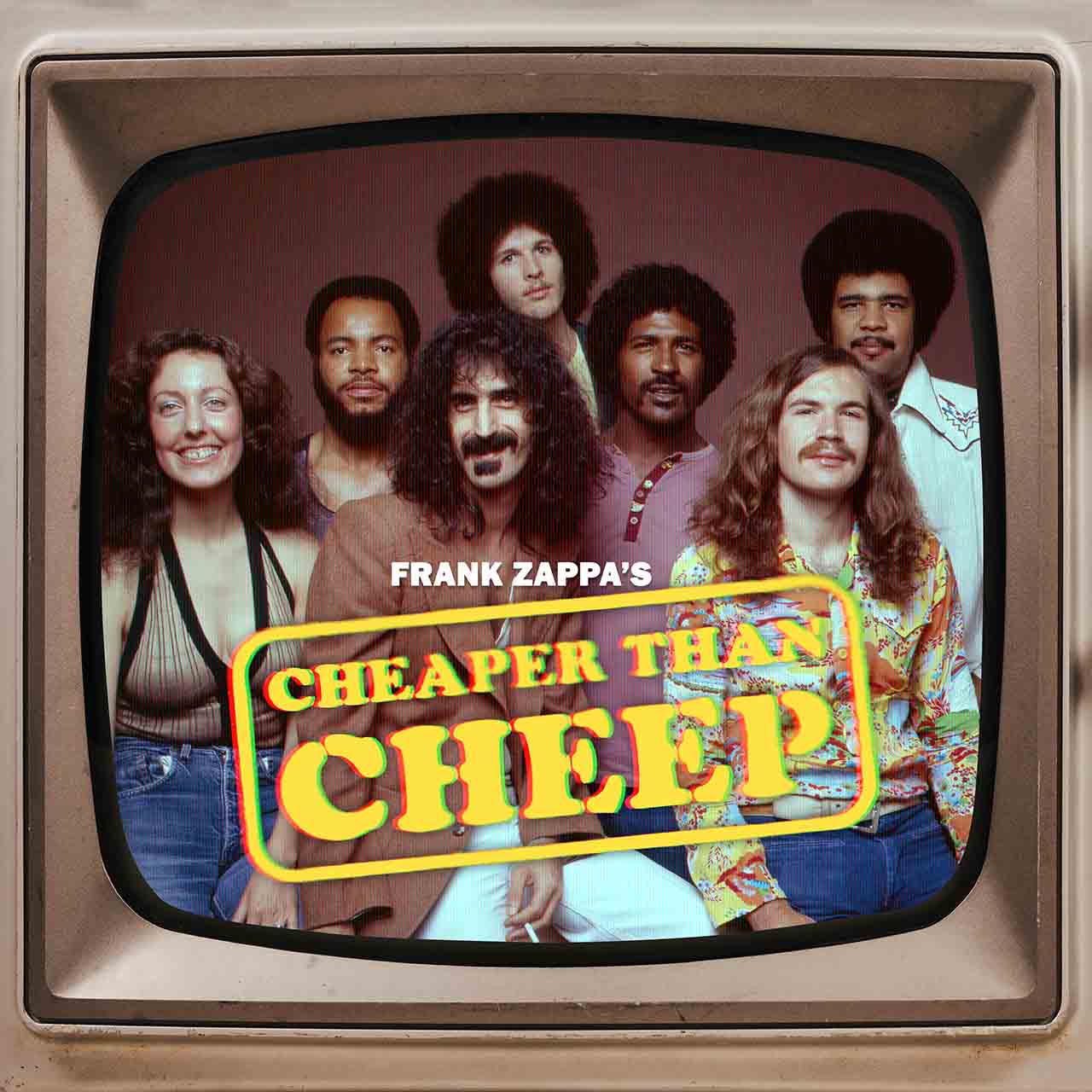
Frank Zappa and his band, the Mothers of Invention, were riding high in June 1974. They’d just completed a 10th-anniversary tour and, only three months earlier, had released Apostrophe (’), their first and only Top 10 album. Energized by those successes, they filmed a two-hour concert for a small, invited audience on June 21 in their Hollywood, California, rehearsal hall. Zappa intended to shop the show to television networks, but shelved it after he discovered that the audio and video were out of sync. Recently, however, his son, Ahmet, restored the tapes.
Ahmet says he and his associates had to “fight through decades of decay, glitches, [and] missing pieces,” and fight they did. The result is a three-disc set called Cheaper Than Cheep, which presents audio and video versions of the previously unseen concert on CD and Blu-ray. (You can also opt for a three-LP vinyl edition, among other configurations.) The video isn’t widescreen (hey, this was 1974), but the image quality is fine for its time, and the sound is even better. The Blu-ray disc offers it in several formats, including Dolby Atmos, stereo, and 5.1 surround. And, yes, everything is now in sync.
The band, one of Zappa’s best, features the late composer on guitar and vocals, plus Chester Thompson (drums), George Duke (keyboards, vocals), Jeff Simmons (guitar, vocals), Napoleon Murphy Brock (flute, tenor sax, vocals), Tom Fowler (bass), and Ruth Underwood (percussion, including marimba). A 24-page illustrated booklet includes notes by Underwood and Zappa archivist Joe Travers.
The 23-song program mines some of Zappa’s most noteworthy material. He reaches all the way back to Freak Out, the Mothers’ sterling 1966 debut, for “Wowie Zowie,” “I’m Not Satisfied,” and “How Could I Be Such a Fool,” which reflects his affection for early rock. Other highlights include “Let’s Make the Water Turn Black,” from We’re Only in It for the Money, and “Inca Roads,” which would appear on 1975’s One Size Fits All. Also excellent are “RDNZL,” a showcase for Underwood’s improvisational virtuosity, and the title track from Apostrophe (’), which is the only number not credited solely to Zappa. (He wrote it with drummer Jim Gordon and Cream’s Jack Bruce.)
On some of his albums, Zappa’s at times puerile humor gets in the way of the music. On Cheaper Than Cheep, though, it’s his band’s excellence and his intricate, frequently jazz-influenced compositions that mostly command center stage, making this a must-buy for fans.
The album is available on vinyl here and on CD/Blu-ray here.
Also Noteworthy

Janis Ian, From Me to You: Live in Bremen 2004. Folk singer Janis Ian was in good spirits and excellent voice and facing an enthusiastic, larger-than-expected audience when she performed in the studio of a German radio station in 2004. More than two decades later, that well-recorded show joins a list of at least five other live albums from the singer, who penned new liner notes for the release.
The 16-song concert, which embraces engaging spoken introductions, arrives on disc just a few weeks before the June 20 debut on PBS of Janis Ian: Breaking Silence, an American Masters documentary. Besides reminding you of what a fine and original songwriter she is, the album underscores the vocal talents of Ian, who boasts a four-octave range.
Accompanied only by her own guitar, she delivers a setlist that includes her two biggest hits, 1975’s Grammy-winning “At Seventeen” and 1967’s “Society’s Child (Baby I’ve Been Thinking),” a number about interracial romance that Ian wrote at age 14. Also here are such other standouts as “Jesse,” “Watercolors,” “Between the Lines,” and “In the Winter,” as well as one successful albeit surprising cover: Sonny & Cher’s chart-topping 1965 pop tune, “I Got You Babe,” which Ian introduces as “an old American folk song.”
The album is available here.
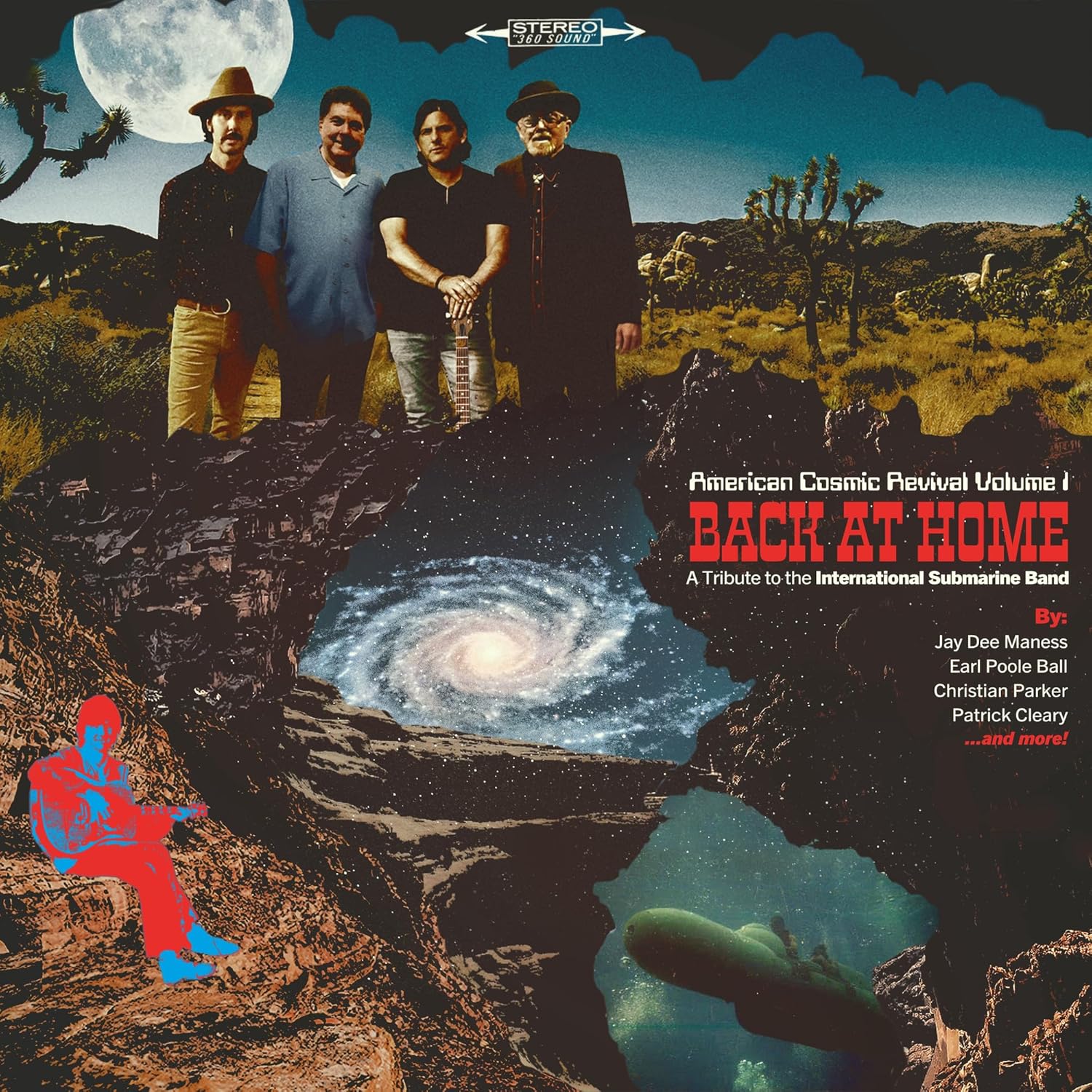
Christian Parker, Patrick Cleary, and Earl Poole Ball. American Cosmic Revival, Volume 1: Back at Home. Christian Parker is in love with the country rock that surfaced in the late 1960s on albums by the Byrds and Gram Parsons. In 2023, he issued Sweethearts, whose 14-track program includes covers of all 11 songs on the Byrds’ Sweetheart of the Rodeo, and last year, he released Change Is Now, which culls its material from multiple Byrds LPs.
This excellent latest effort by Parker, who sounds a bit like Parsons, revisits all the songs from a similarly styled project: 1968’s Safe at Home, the only album by the International Submarine Band, a country rock outfit that Parsons led before he joined the Byrds. Collaborating on the CD with Parker are guitarist Patrick Cleary and pianist Earl Poole Ball, who played on Sweetheart of the Rodeo, Safe at Home, and Parker’s last two albums. Also here are pedal steel player JayDee Maness, another veteran of the Safe at Home sessions, percussionist Ron Keck, and bassist Michael Rinne.
Among the selections are “Blue Eyes,” “Luxury Liner,” “Do You Know How It Feels to Be Lonesome?,” and “Strong Boy,” all written or co-written by Parsons; Merle Haggard’s “I Must Be Somebody Else You’ve Known”; and Johnny Cash’s “I Still Miss Someone” and “Folsom Prison Blues.”
The album is available on vinyl here and on CD here.
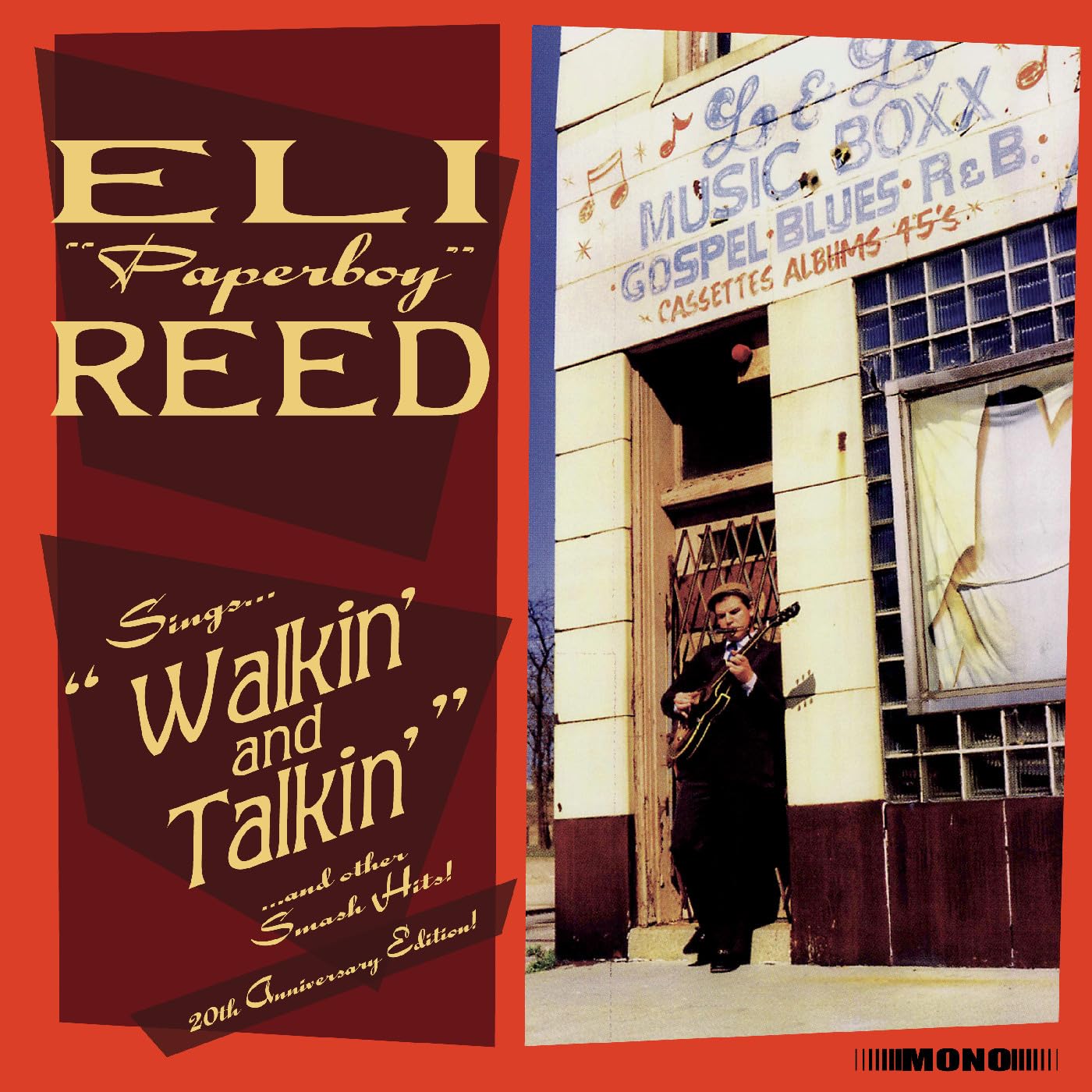
Eli “Paperboy” Reed, Sings Walkin’ and Talkin’ and Other Smash Hits! (20th Anniversary Edition). Though its title jokingly touts “smash hits,” this album was the hitless, self-released 2005 debut release from Eli “Paperboy” Reed, who at the time was a 21-year-old college student and little-known Boston-area busker. Two decades later, the record has been remastered and is being reissued with its 12 tracks augmented by 15 previously unavailable bonus numbers, 11 of which the soul-blues revivalist and his band played at Harvard University’s WHRB radio station.
The sound is lo-fi—Reed recorded the original performances live to analog tape in mono—and the material is a bit uneven. That said, the singer (real name, Eli Husock) exudes talent and enthusiasm throughout the set, which features two originals plus well-known and obscure soul and blues tunes dating from the 1920s to the 1960s. Highlights include “Poor Side of Town,” which produced a chart-topping single for Johnny Rivers in 1966; Reed’s own “Don’t Let Me Down”; “A Woman, a Lover, a Friend,” the 1960 Jackie Wilson hit; Don Robey’s “You’re Gonna Make Me Cry”; and Howlin’ Wolf’s “I’m Leaving You.”
The album is available on vinyl here and on CD here.
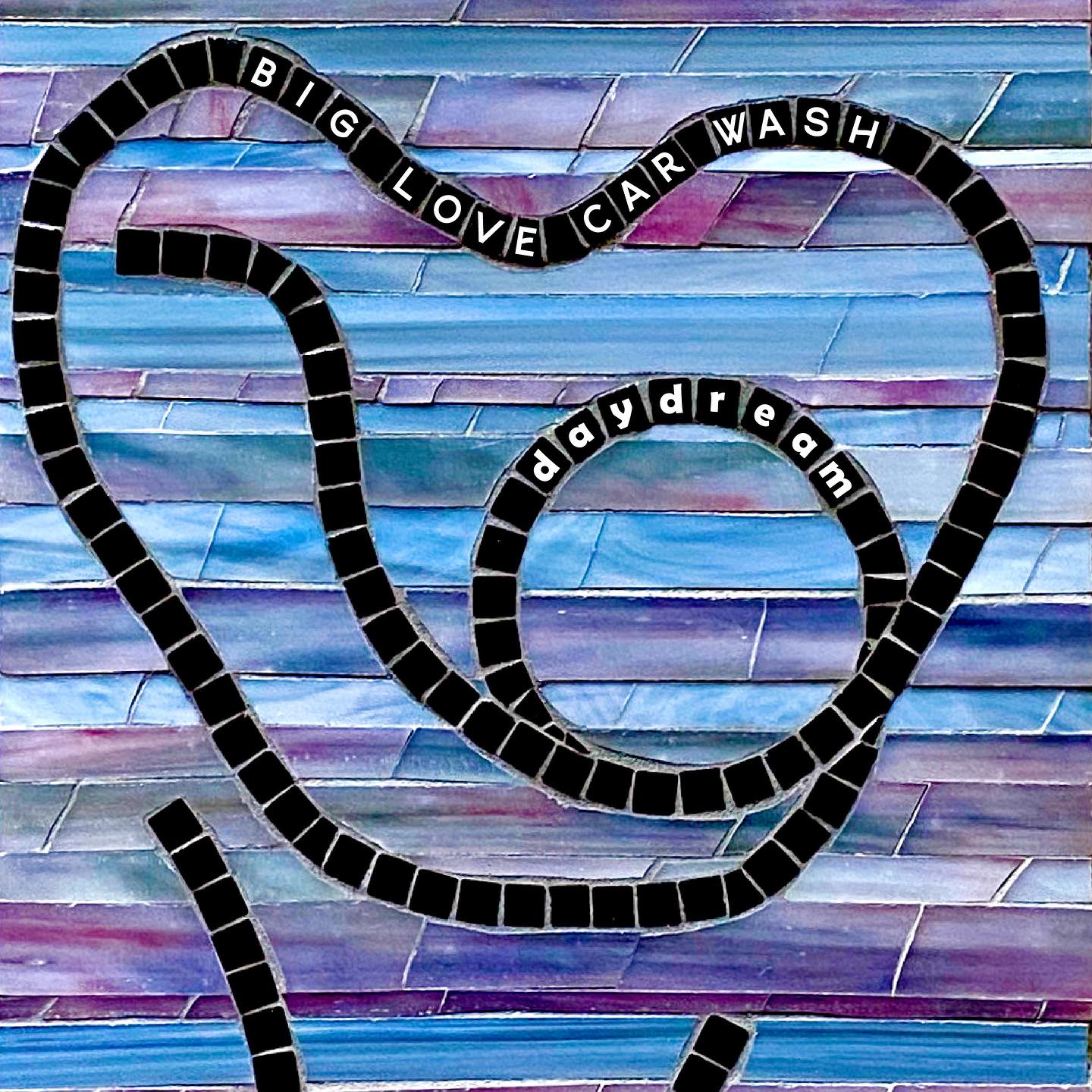
Big Love Car Wash, Daydream. This auspicious, self-produced debut features a mostly Austin, Texas–based quartet consisting of Sol Chase (mandolin, bouzouki), Everett Wren (fiddle, dobro, lap steel, guitar, percussion), David Rabinowicz (guitar, piano), and Taylor Turner (electric and upright bass). All except Turner contribute vocals, and all four ostensibly co-wrote the material, though the CD cover offers no composer credits. (It doesn’t even list the performers.)
While rooted in bluegrass, their well-played, hour-long set variously evidences the influence of folk, jazz, and Celtic music. Highlights include the lilting, album-opening “Dream Journal”; “Subtleties,” a melancholy, somewhat abstruse song about a relationship; and the deftly written “21st Century Telegraph.” (Sample lyric: “I turn the dial clockwise, but there’s static on 98.2 / Seems the country station’s gone and so is hopin’, so is pain, and so are you.”) Most of the album is subdued and introspective, but there are a few mood brighteners, such as the playful, sprightly “Interlude II: Music Song.”
The album is available for download here.
Discover more from By Jeff Burger
Subscribe to get the latest posts sent to your email.
 By Jeff Burger