
Vicki Peterson and John Cowsill, Long After the Fire. This CD is a rare project by Vicki Peterson, who is best known as the Bangles’ lead guitarist, and her husband, John Cowsill, who struck gold as a singer and drummer in the siblings band the Cowsills. Here, they serve up a diverse and mostly satisfying program that variously recalls country rockers like Gram Parsons and the Flying Burrito Brothers and other acts from the same era, such as the Association and the Mamas and the Papas. You can hear the occasional Fleetwood Mac echo as well. John’s brothers, Barry and Bill Cowsill, who died in 2005 and 2006, respectively, wrote or co-wrote all 12 songs.
The Cowsills’ members had more to offer than their bubblegum hits might suggest. John, for example, spent years in the Beach Boys’ touring band. Both Barry and Bill were talented songwriters, and Bill’s post-Cowsills credits included co-founding the Blue Shadows, a Canada-based outfit whose On the Floor of Heaven has been justifiably labeled “a lost Americana classic.”
Three numbers that appear on that Blue Shadows album—“Fool Is the Last One to Know,” “Is Anybody Here,” and “A Thousand Times”—rank among the highlights on After the Fire. Others include the infectious, well-hooked “Vagabond” and “You, in My Mind,” which sounds as if it would fit seamlessly into a set by the Bangles.
The album is available on vinyl here and on CD here.

Matt Andersen, The Hammer & the Rose. The Big Bottle of Joy, the self-produced last release from Canadian singer, songwriter, and guitarist Matt Andersen, found him working with a big ensemble that included a brass section and multiple backup singers. This time around, he takes a different approach.
Recorded live in the studio and produced by percussionist and composer Joshua Van Tassel, Andersen’s new set does feature a few backup musicians, including an acoustic guitarist, a keyboard player, an acoustic bassist, and a lap steel player. But the accompaniment is understated on most of the tracks, allowing the spotlight to shine primarily on Andersen’s rich, soulful vocals.
The program includes eight selections that he wrote or co-wrote, plus the melancholy “Countin’ Quarters,” by Nova Scotia–based blues folk musicians Ryan and Scott Hupman, and an atmospheric cover of J.J. Cale’s “Magnolia.” The album’s few midtempo numbers are relatively prosaic, but the predominant ballads, including “Stay Home with You,” “Tonight Belongs to You,” and the title cut, are engrossing and emotive.
The album is available on vinyl here and on CD here.

Domenic Cicala, As Good as It Gets/Vamoose. Washington, D.C.–area singer/songwriter Domenic Cicala continues to dabble in multiple genres, so it’s not surprising that he divided this latest release into two distinct parts. The five-number half labeled As Good as It Gets has been billed as the rock part, though a few sweet ballads slip into the mix. The half called Vamoose, meanwhile, delivers an equal number of country tunes rooted somewhere between Nashville and Bakersfield. (Together, the two sets clock in at less than 40 minutes, so it’s not clear why Cicala opted to present them on a two-CD set rather than a single disc.)
Highlights include “Dance with the Devil,” a sax-spiced rocker; “Someday,” an introspective ballad; “One Good Reason,” a pedal-steel enhanced weeper; and the album’s only non-original, the catchy “There’s a Heartache Following Me,” which was penned by Nashville record producer Ray Baker.
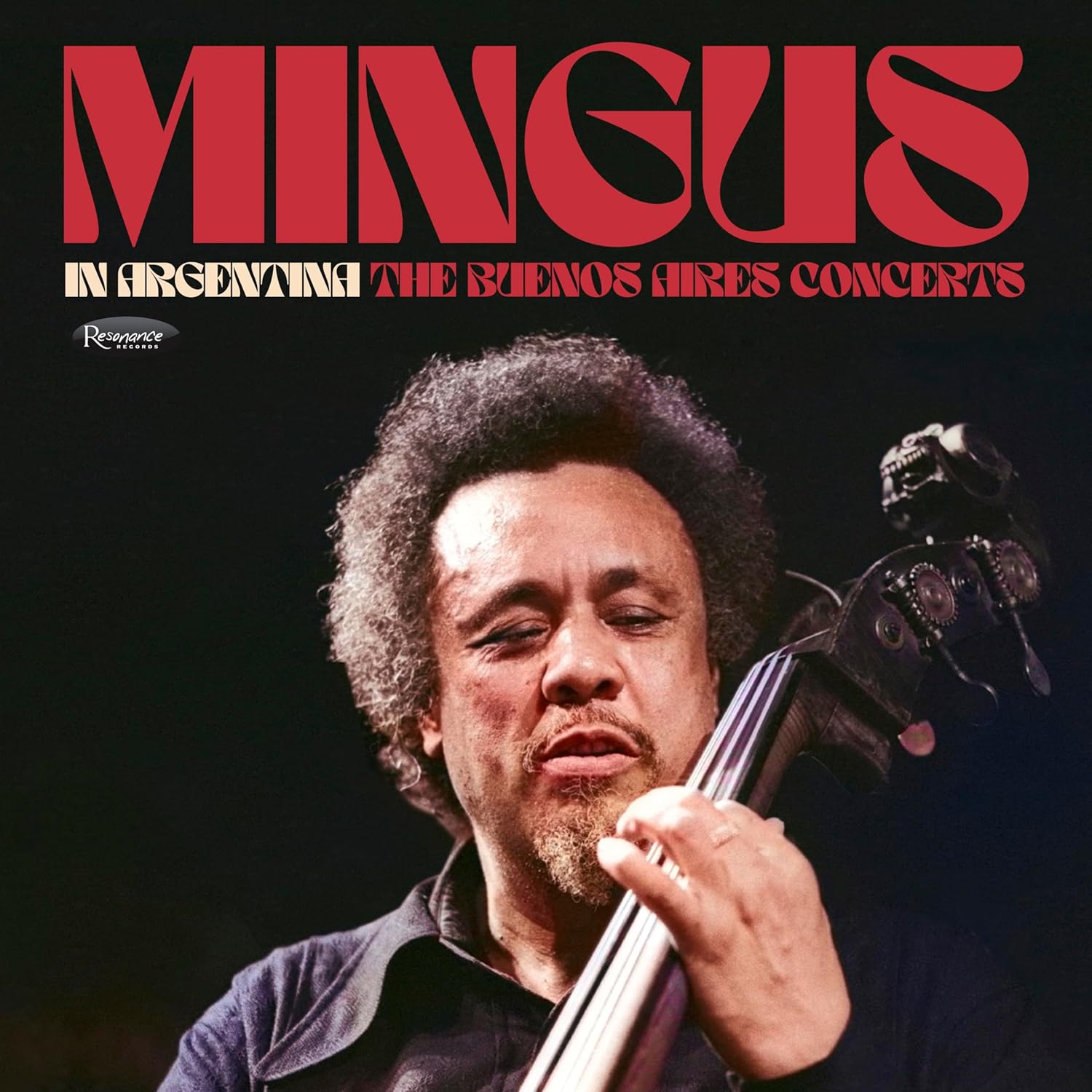
Charles Mingus, Mingus in Argentina: The Buenos Aires Concerts. Recorded at two June 1977 concerts, this two-CD set has not previously been officially released. It finds legendary jazz bassist and composer Charles Mingus working with a band that includes Ricky Ford on tenor sax, Jack Walrath on trumpet, Robert Neloms on piano, and Dannie Richmond on drums. This is not an ensemble that has received much notice to date, nor is the time of this recording—only about a year and a half before Mingus’s death at age 56 from Lou Gehrig’s disease—considered one of his peak periods.
Still, the performances are well worth hearing. Among the selections are “Goodbye Pork Pie Hat,” one of the artist’s most famous compositions, and “Fables of Faubus,” both from 1959’s Mingus Ah Um. Also satisfying are the title cut and “Noddin’ Ya Head Blues” from Three or Four Shades of Blues, which Mingus recorded only three months before the Buenos Aires gigs. From 1975’s Changes One and Changes Two come “Sue’s Changes” and “Duke Ellington’s Sound of Love,” which respectively pay tribute to Mingus’s wife and musical hero, and “For Harry Carney,” whose title name checks Ellington’s sax player and clarinetist. Both discs end with a brief solo piano improvisation by Mingus.
The album comes with a 36-page booklet whose features include notes from Mingus biographer Brian Priestley and reminiscences from members of the band that played with him in Argentina.
The album is available on vinyl here and on CD here.
Discover more from By Jeff Burger
Subscribe to get the latest posts sent to your email.
 By Jeff Burger